
Paper, labour, and distribution costs.
E-books are paperless, stored in various digital formats which can be distributed easily. Technically right, probably in some cases, legally wrong due to copyrights and permissions, in particular to Digital Copyright law.
In any case, e-books are easier to store and distribute. This is an undisputed fact. As such, it is a common perception among consumers that e-books should be, and will be cheaper than paperbacks.
Printing machinery, binding materials and sizing, all these are costs for printing books. After which, distributing printed books itself is another major cost, considering all the logistics and planning that goes behind it. Not to mention, storage costs for that printed literature that are not sold, since this is definitely not a JIT (Just-in-time) inventory system.
To many of us, the e-book should cost very little, probably even next to nothing because there is no paper, printing, and shipping involved. All of the costs associated with print, from the printing to the shipping to the distribution to the warehousing to returns, seems to be non-existent for selling e-books. Compared to its counterpart, the cost of a printed book amounts to a mere few dollars per copy, depending on the size of the print run.
Costs of e-books
Well first off, the high costs of ‘manufacturing’ e-books are not the due to paper, labour and distribution.
E-books are indeed cheaper than physical books. In this Information Technology age, we all know that it is cheaper to produce something virtual. A blog shop website is cheaper, and probably faster considering ripping off and copying an existing website, to produce as compared to replicating a physical retail shop. It is faster and economically cheaper to send a .mp3 file than to physically deliver it to him/her. An essay is easier to edit in its ‘soft’ copy than its ‘hard’ copy. Anyone suggesting otherwise probably has a dog in the fight.
So who got the biggest pie?
Looking at the profits helps to understand this.
From the macro view, the lion’s share of the retail price of a book, whether in digital or physical form, is going to the publisher.[1] Of which, the publishers set the price and for the case of e-books, publishers will receive 70 percent. Publishers took that deal and then imposed it on book sellers like Amazon [2]
E-readers being ripped off?
Under the assumption that physical book price is higher than ebook price, that is, $25.00 as the reference price for a physical book, and let’s say the e-book would have and should have sold for $10.00 at Amazon online. However due to different business models ( as explained below), the publisher is demanding for 50% profit of the reference price of $25.00, requiring a profit of $12.50, regardless ebook or physical book.
The table below explains the 2 selling models. [2]
Wholesale model for selling e-book:
Publisher: $12.50 (based on 50 percent of $25.00 of hardcover retail price)
Distributors such as Amazon: Incur a loss $2.50 if it wanted to sell at a listed price of $10.00
Not wanting to incur a loss for Amazon, the business model has to change! Also, since the magnitude of profit is reduced for the publisher (50% of $25.00, compared to 50% of $10), the publisher and distributor agreed that the ratio of profits will increase to 70 – 30, in favour of the publisher.
Thus, under Agency model e-book:
Publisher: $10.50(70 percent of $15.00)
Amazon: $4.50 (30 percent of $15.00)
Publishers control via pricing
The e-book could have sold for $10 but instead, it is now $15.00. As a result, e-booksellers are competing. And if higher prices of e-books slowed down consumers’ adoption of e-books and kept people attached to print, publishers will be happier with that too. Not because they (the publishers) are getting a higher profit ratio (considering shifting from 50% to 70%), most of the tools at the publisher’s disposal for making a book a hit are actually tied to a print world, from buying front-of-the-book store placement to book tours to promote and market the latest title.
So why in the right mind, would a publisher allow an e-book to be cheaper than a printed book in the first place?
Higher profits
In addition, the increased popularity of Apple’s iPad prompted some publishers to shift from the so-called wholesale model, where retailers set prices, to the agency model, where publishers set prices. Since that happened in 2010, prices that consumers pay for e-books have generally risen and Amazon and other online book sellers who discount have been under pressure. [3]
Quoting part of a statement that the late Apple CEO Steve Jobs allegedly made to biographer Walter Isaacson: [3]
We told the publishers, “We’ll go to the agency model, where you set the price, and we get our 30 percent, and yes, the customer pays a little more, but that’s what you want anyway.”
They went to Amazon and said, “You’re going to sign an agency contract or we’re not going to give you the books.”
Go to for more details: http://www.scribd.com/doc/88914382/U-S-v-Apple-et-al-e-book-complaint
Pricing discrepancies
Also, due to the 2 different selling models here; Wholesale and Agency model, publishers selling print books via the wholesale model and e-books via the agency model, at times resulting in a confusing situation of e-books sometimes costing more than their print counterparts.
To further elaborate, with print, Amazon and other booksellers are allowed to charge a price they want. So when booksellers, for instance, discount the print books under the e-book price, publishers will have little control over that. E-books, however, publishers set the price and e-booksellers aren’t allowed to discount. With ebooks, publishers retain the rights to price the ebooks! That is a difference from the first case. Hence this resulted in an inconsistency with the pricing of books on 2 different mediums.
Future of eBooks
For now, eBooks will be more expensive than printed books. Until we challenge it or to voice our opinion, it is highly likely that it will not change.
Ultimately, eBooks do not deteriorate as ‘quickly’ as physical books, you can be assured that the conditions remain pretty much the same. So why are readers paying more for ebooks?
Conclusion
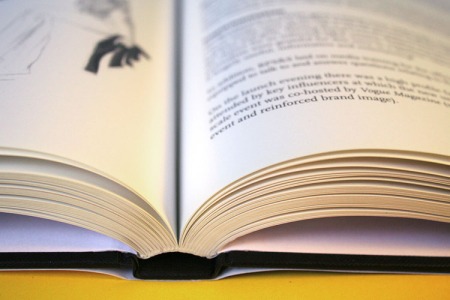
In short, printed books will still be cheaper than e-books, at least for now. Plus with printed books, it is more convenient to swap books as there is no such thing as DRM (Digital Rights Management) or copyright problems. Until the day comes, printed books will be more affordable and more environmentally friendly, considering the fact that you do not need electricity to read a book at all. Hopefully, one day ebook will soon be cheaper than its counterparts.
Check out our next article Are E-books Really Cheaper?
Written and compiled by BooksAvenue
17/12/2013
updated 28/06/2014, 14/12/2014, 07/02/17
[1] http://www.csmonitor.com/Business/Saving-Money/2013/0112/Why-do-e-books-cost-so-much
[2] http://news.cnet.com/8301-1023_3-57412587-93/why-e-books-cost-so-much/


Let us know how to help you!